
Morocco Spiritual Tour: Faith, Heritage & Silence
Morocco spiritual tour with local guides: Islamic heritage, Sufi music, Jewish mellahs and synagogues, and Sahara silence. Respectful, tailor-made.
Morocco spiritual tour
A Morocco spiritual tour follows the faiths that shaped this country over centuries. Muslim scholars studied in the medersas of Fes, Sufi brotherhoods still gather in their zawiyas to chant and pray, and Jewish families lived in the mellahs of Marrakech, Fes and Essaouira for generations. Our local guides tell these stories with knowledge and respect, whatever your own beliefs.
Faith in Morocco is part of everyday life: the call to prayer over the rooftops, the Friday couscous, the evening meal that breaks the Ramadan fast. You do not need to be religious to feel it. Many guests end their journey in the Merzouga desert, where a night under the stars brings a silence that every tradition values.
 Best seasonMarch to May, September to November
Why choose faith & spiritual journeys in Morocco
Islamic heritage you can enter
Most mosques are closed to non-Muslims, but the Hassan II Mosque in Casablanca has guided visits, and old medersas such as Ben Youssef in Marrakech and Bou Inania in Fes show the beauty of Islamic architecture from the inside.
Sufi music and zawiyas
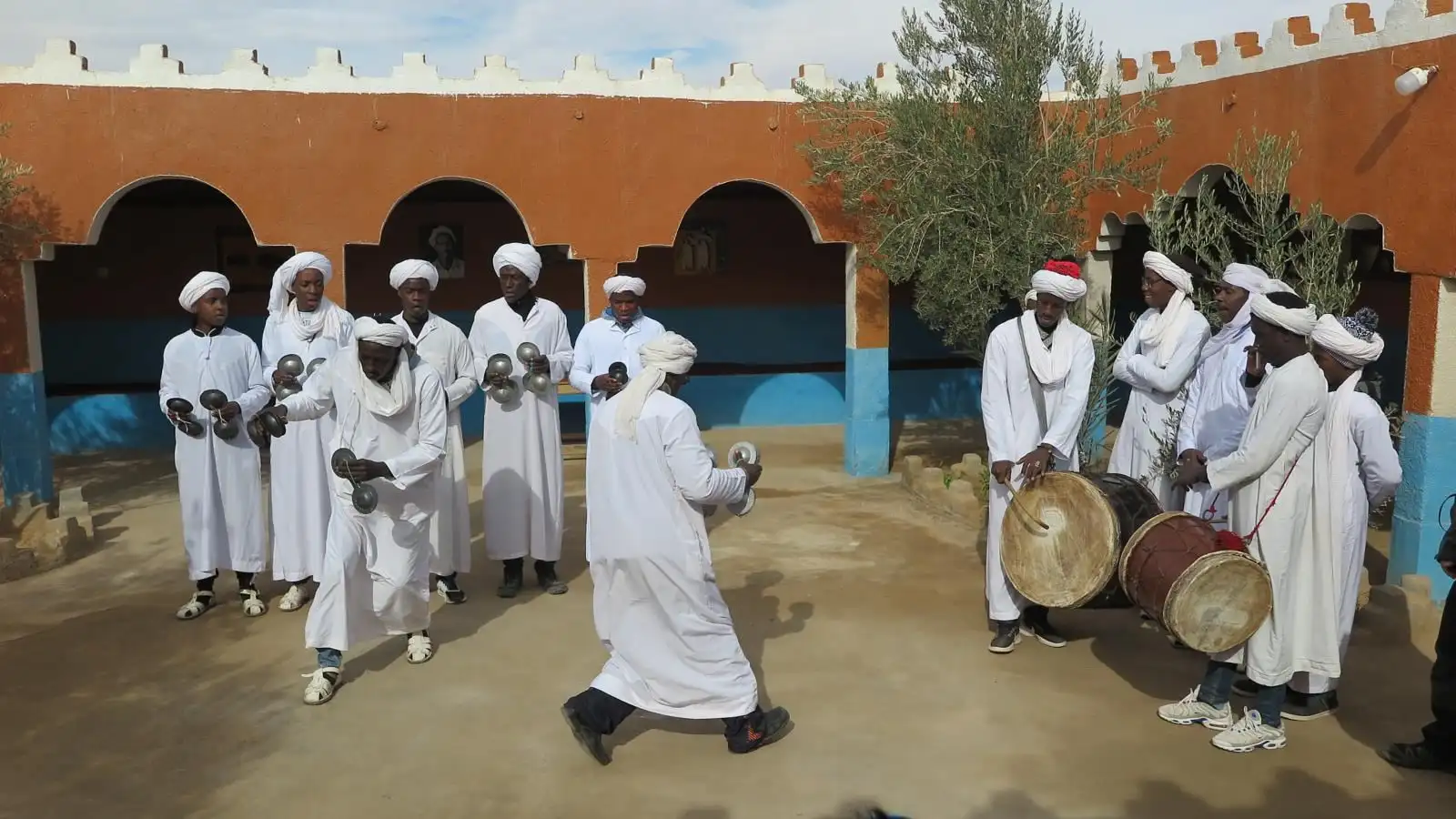
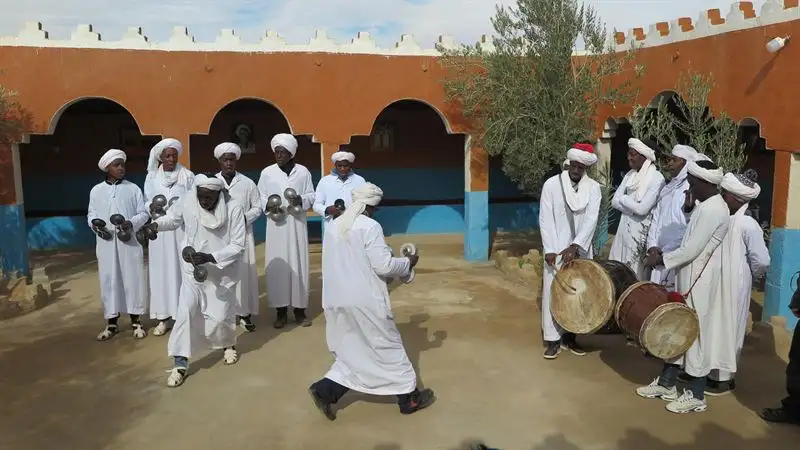
Sufi brotherhoods are a living part of Moroccan Islam. Their chants, Andalusian music and Gnawa night ceremonies can sometimes be heard at concerts, festivals and cultural evenings open to visitors.
Jewish heritage of Morocco
Morocco’s Jewish history is long and deeply rooted. Visit the mellahs, synagogues and cemeteries of Marrakech, Fes and Essaouira, and the Museum of Moroccan Judaism in Casablanca.
A country of coexistence
Mosques, synagogues and churches stand close together in several cities. Our guides explain how communities lived side by side, with honesty about both shared life and difficult times.
The silence of the desert
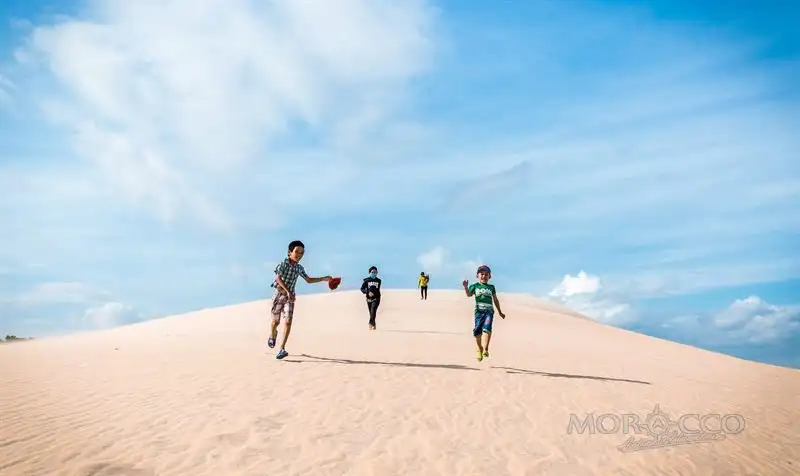
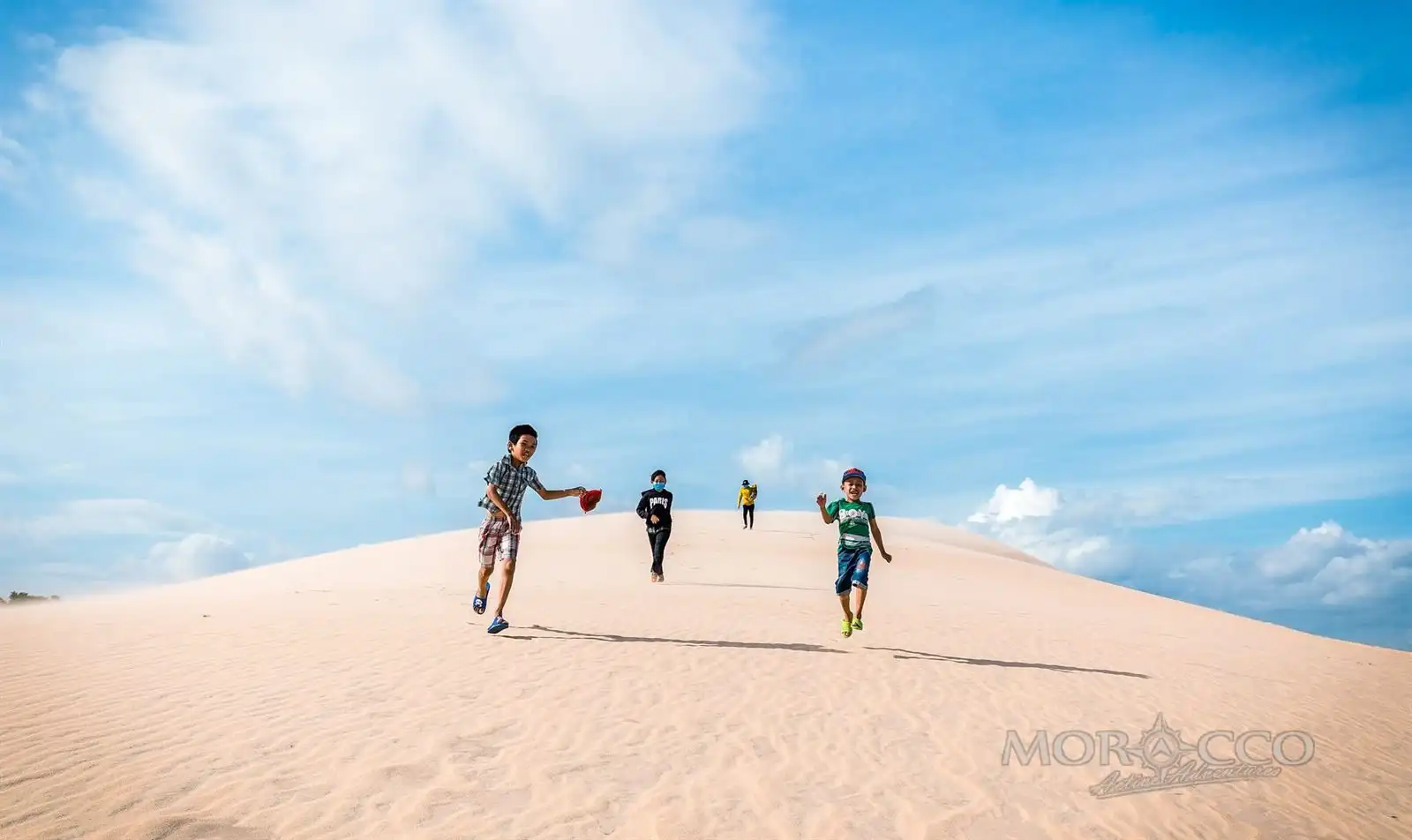
Prophets, hermits and nomads have all found meaning in the desert. A night in Erg Chebbi, far from noise and light, gives space for prayer, meditation or simple reflection.
Who is Morocco spiritual tour for?
Muslim travellers
We plan around prayer times, halal food and visits to mosques and zawiyas, and can include Friday prayer in a city mosque.
Jewish heritage travellers
Families tracing Moroccan roots and groups interested in Jewish history visit mellahs, synagogues and cemeteries with a knowledgeable guide.
Seekers of all faiths
Christian groups, spiritual travellers and the simply curious are welcome. The tour is about understanding, not preaching.
Respectful travellers only
Sacred places are still in use. If you are not comfortable dressing modestly or following local rules at religious sites, this tour is not for you.
“Faith in Morocco is part of everyday life: the call to prayer over the rooftops, the Friday couscous, the evening meal that breaks the Ramadan fast.”
— Our team in MoroccoHow it works
- Tell us your dates
Send us your dates, where you are staying and how many you are – on WhatsApp or by email.
- We plan it with you
We suggest the best time and option for faith & spiritual journeys and send you a clear price.
- Meet our team
On the day, our team meets you and explains everything before you start.
- Enjoy every moment
Live the experience – and add more adventures to your trip if you like.
Ways to do it with us
Book it on its own, or as part of one of our itineraries.
Jewish heritage walk in Marrakech
The mellah, the Lazama Synagogue and the old Jewish cemetery, with time to talk about the families who lived here.
Ask us on WhatsApp →Fes sacred city day
Medersas, the doorways of the Qarawiyyin and the Moulay Idriss shrine (seen from outside), the Ibn Danan Synagogue in the mellah and, if possible, an evening of Sufi or Andalusian music.
Ask us on WhatsApp →4 Day Morocco Tour from Casablanca
Start with a guided visit of the Hassan II Mosque before continuing inland.
See the itinerary →Fes to Marrakech 4 Day Desert Tour
From the spiritual capital of Fes to a quiet night in the Merzouga dunes, then on to Marrakech.
See the itinerary →A typical day
Times are approximate for a full-day sacred city tour in Fes; prayer times, Fridays, Shabbat and Ramadan change the order and opening hours.
- Meet your guide at your riad
A short talk about your faith, interests and the sites that are open that day.
- Medersa visit
The Bou Inania or Al-Attarine medersa, where scholars studied for centuries.
- Around the Qarawiyyin
The doorways of the Qarawiyyin and the Moulay Idriss shrine, seen from outside for non-Muslims.
- Lunch break
A calm meal in a riad courtyard, planned around prayer times if needed.
- The mellah
The old Jewish quarter, the Ibn Danan Synagogue and stories of the families who lived there.
- Back to your riad
Free time to rest before an evening of Sufi or Andalusian music, when one is on.
Where it happens
Faith & spiritual journeys with us takes place in these parts of Morocco – tell us where you are staying and we suggest the closest option.
- 1Fes
- 2Marrakech
- 3Merzouga (Erg Chebbi)
- 4Essaouira
- 5Casablanca
- 6Rabat
- 7Meknes
Useful information for Morocco spiritual tour
Rules at mosques and shrines
In Morocco, most mosques, zawiyas and saints’ shrines are open to Muslims only. Non-Muslims can see doorways and courtyards from outside, visit medersas and museums, and join the guided tour of the Hassan II Mosque. Please do not walk in, even if a door is open.
Visiting the Hassan II Mosque
Guided visits run outside prayer times and need a ticket; times change on Fridays, religious holidays and during Ramadan. Dress modestly, and women should bring a scarf. Shoes are removed and carried in a bag.
Synagogues and Jewish sites
Several synagogues in Marrakech, Fes and Essaouira are open to visitors, some with a small entry fee or donation. Men may be asked to cover their heads. Some sites close on Shabbat and Jewish holidays.
Ramadan and religious holidays
During Ramadan, life slows in the day and comes alive after sunset. Visitors are not expected to fast, but eating in the street during the day is best avoided. Dates of Ramadan and Eid move about eleven days earlier each year.
Photos and behaviour
Do not photograph people praying, and keep your voice low near mosques at prayer time. At music ceremonies, ask before filming – some moments are private.
Before you book
- Faith and focus
- Tell us your faith and what you want to see – Islamic, Sufi, Jewish or mixed heritage – so we choose the right guide and sites.
- Access rules
- Most mosques and shrines are open to Muslims only; non-Muslims visit medersas, synagogues, museums and the Hassan II Mosque instead.
- Dress
- Clothes covering shoulders, arms and knees; women need a headscarf for the Hassan II Mosque and men a head cover for synagogues.
- Dates
- Shabbat, Jewish holidays, Fridays, Ramadan and Eid affect opening hours – share your dates and we confirm what is open.
- Groups
- For faith groups, tell us your numbers and any prayer or meal needs in advance.
Best time for Morocco spiritual tour
Spring and autumn are comfortable for city walks and desert nights. Check the dates of Ramadan and Eid when planning: they can be a beautiful time to visit, but opening hours change. Music festivals in Fes and Essaouira usually take place in late spring or early summer.
- JanGood
- FebGood
- MarBest
- AprBest
- MayBest
- JunGood
- JulPossible
- AugPossible
- SepBest
- OctBest
- NovBest
- DecGood
BestGoodPossibleAvoid
Request your faith & spiritual journeys
Fill in the form and press send: your request comes straight to our team’s inbox (or WhatsApp, if you prefer) and we reply with the details and a clear price.
- No payment to send a request
- We adapt the option to you
- Or write to us: +212 600 643 098
Morocco spiritual tour: 10 questions
What does a Morocco spiritual tour include?
It depends on your interests: Islamic heritage sites and medersas, Sufi music or a zawiya visit for Muslims, Jewish mellahs and synagogues, and quiet time in the Sahara. We build each Morocco spiritual tour around your faith, your group and your pace.
Can non-Muslims enter mosques in Morocco?
In general, no. Most mosques and shrines are reserved for Muslims. The big exception is the Hassan II Mosque in Casablanca, which offers guided tours for all visitors, and you can visit old medersas such as Ben Youssef in Marrakech and Bou Inania in Fes.
Is Morocco an Islamic country?
Yes. Islam is the state religion and most Moroccans are Sunni Muslims. The constitution also recognises the Jewish heritage of the country, and foreigners of other faiths can practise freely.
Are there Jewish heritage tours in Morocco?
Yes. Jewish heritage tours in Morocco usually include the mellahs of Marrakech, Fes and Essaouira, their synagogues and cemeteries, and the Museum of Moroccan Judaism in Casablanca. We plan routes around Shabbat and Jewish holidays.
What are the main Jewish heritage sites in Morocco?
The Lazama Synagogue and Jewish cemetery in Marrakech, the mellah and Ibn Danan Synagogue in Fes, the old mellah and Bayt Dakira in Essaouira, and the Museum of Moroccan Judaism in Casablanca are among the best known.
Where can I hear Sufi music in Morocco?
Fes is the centre of Sufi and sacred music, with concerts and festivals during the year. Gnawa music is strong in Essaouira and Marrakech. Some zawiya ceremonies are private, so we look for events that welcome visitors.
Is a spiritual retreat in Morocco possible?
Yes. Many guests choose a few quiet days in the Atlas or the Merzouga desert for prayer, meditation or reflection, often after a heritage tour in Fes or Marrakech. We arrange calm places and leave plenty of unplanned time.
Does Ramadan affect tourists in Morocco?
A little. Some cafés and restaurants close in the daytime and opening hours are shorter, but hotels serve visitors as usual. Evenings are lively and families are very welcoming, so it can be a special time to travel.
Can Christians attend church in Morocco?
Yes. Catholic and Protestant churches hold services in the main cities, mostly in French and sometimes in English. Foreigners can worship freely; preaching to Muslims is not allowed.
What should I wear on a Morocco spiritual tour?
Loose clothes that cover shoulders, arms and knees. Women should carry a headscarf for the Hassan II Mosque and conservative areas; men should have a cap or kippah for synagogues. Shoes that slip off easily help.
Combine it with
Two experiences in one trip – our favourite pairings.
+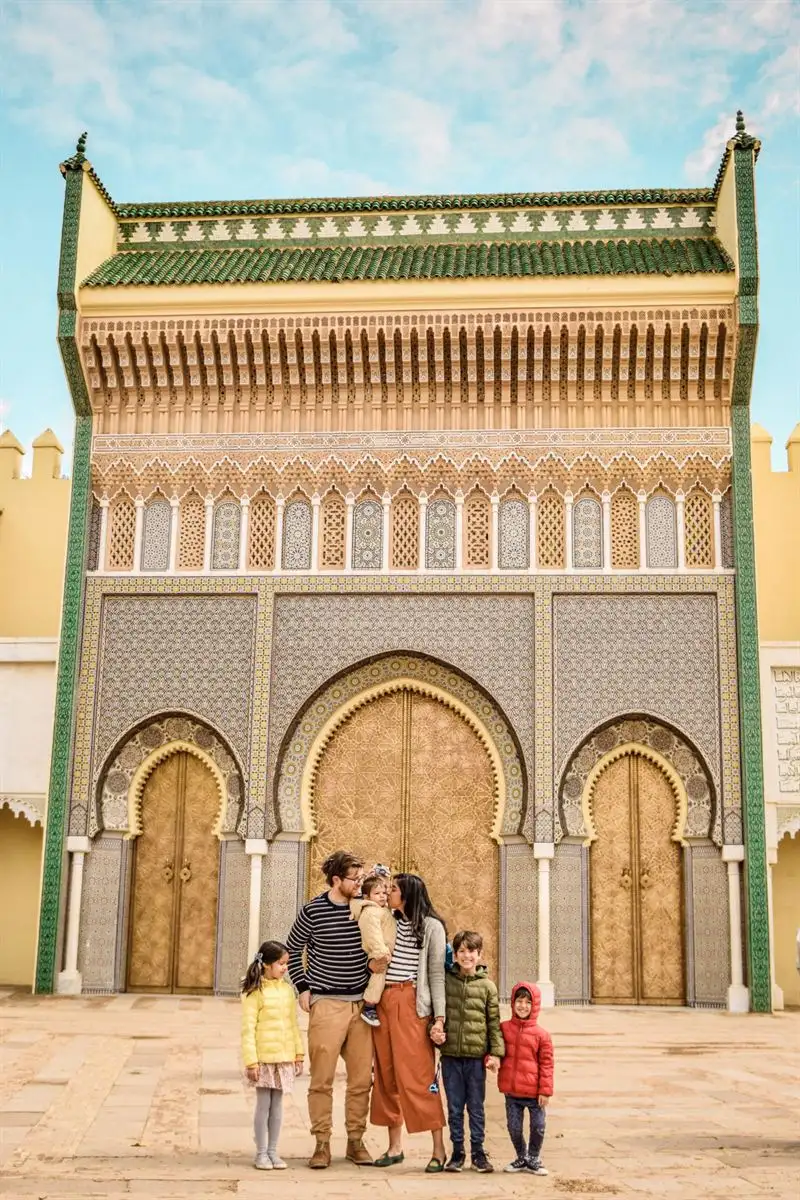 Faith & spiritual journeys + Cultural explorationAdd a crafts and medina day in Fes to see daily life around the sacred sites.See cultural exploration →+
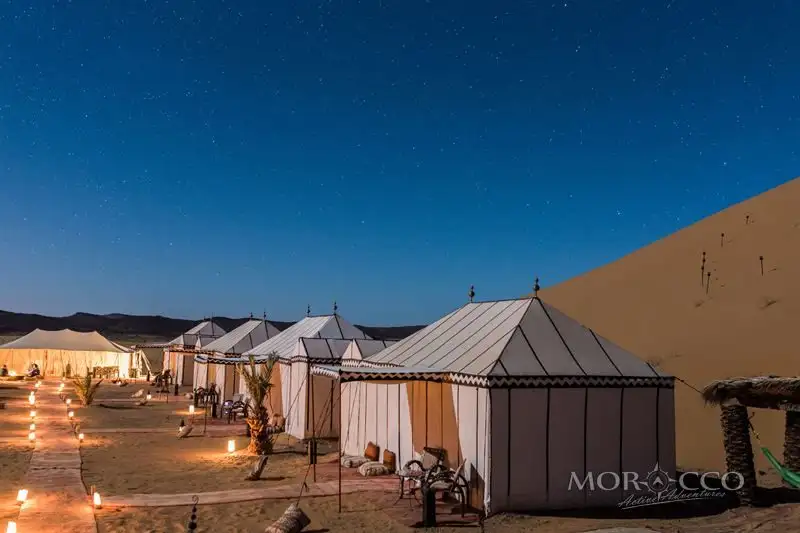 Faith & spiritual journeys + Desert camping & stargazingAfter Fes, travel to Merzouga for a quiet night of reflection under the desert stars.See desert camping & stargazing →
Add faith & spiritual journeys to your trip
Tell us your dates and where you are staying – we organise everything with you.