
Eco Tourism Morocco: Travel Lightly, Travel Local
Eco tourism Morocco with a local team: Atlas village stays, desert walks, women’s cooperatives and small groups that keep your money in local hands.
Eco tourism Morocco
Good eco tourism Morocco trips are about how you travel as much as where you go. We are a local team, so the money you spend stays with Moroccan guides, drivers, cooks, muleteers and family guesthouses. We favour walking, cycling and small groups, sleep in locally owned places, and plan routes that respect villages, water and wildlife. Responsible travel should feel like a richer trip, not a list of rules.
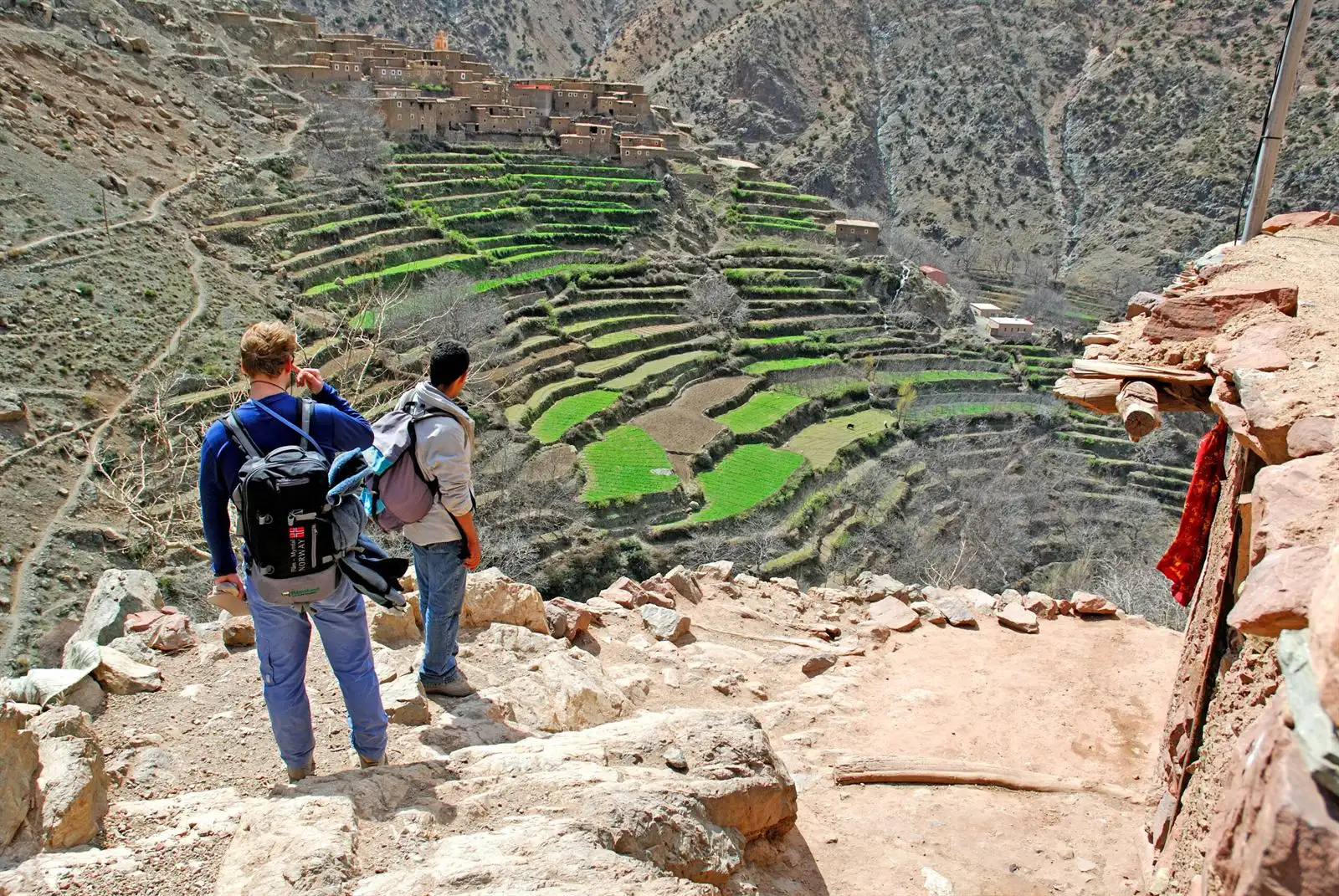
Morocco is a dry country with fragile landscapes: terraced valleys in the High Atlas, oases fed by old irrigation channels, and the dunes of Erg Chebbi. Responsible travel here means using water carefully, saying no to plastic, and meeting people as hosts rather than as a backdrop. We help you do that without making your holiday complicated.
 Best seasonMarch to June, September to November
Why choose responsible eco travel in Morocco
Local team, local income
Your trip is run by Moroccans living in the regions you visit. Guides, drivers, cooks and hosts are local, so tourism supports the families who live there.
Slow, low-impact travel
Trekking with mules in the Atlas, cycling between villages or walking in the dunes leaves a small footprint, and you see far more than from a car window.
Village guesthouses
We prefer family gîtes and locally owned eco lodges in Morocco to big hotels. You eat what the village grows and sleep in buildings made with local earth and stone.
Cooperatives
Women’s argan oil cooperatives on the coast and weaving or farming cooperatives in the mountains let you buy directly from the people who make things.
Learning water wisdom
In the south, khettara underground channels and shared irrigation rules have kept oases alive for centuries. Our guides explain how they work and why every litre counts.
Who is eco tourism in Morocco for?
Conscious travellers
If you want your trip to do some good, or at least no harm, this is the way to see Morocco.
Walkers and cyclists
Most eco tours in Morocco are built around active days in the mountains, valleys and desert.
Families
Children learn quickly in a village: baking bread, meeting animals and seeing where water comes from.
Not for luxury-only travellers
Village stays are simple and clean, with shared bathrooms in some places. If you need hotel comfort every night, tell us and we balance the route.
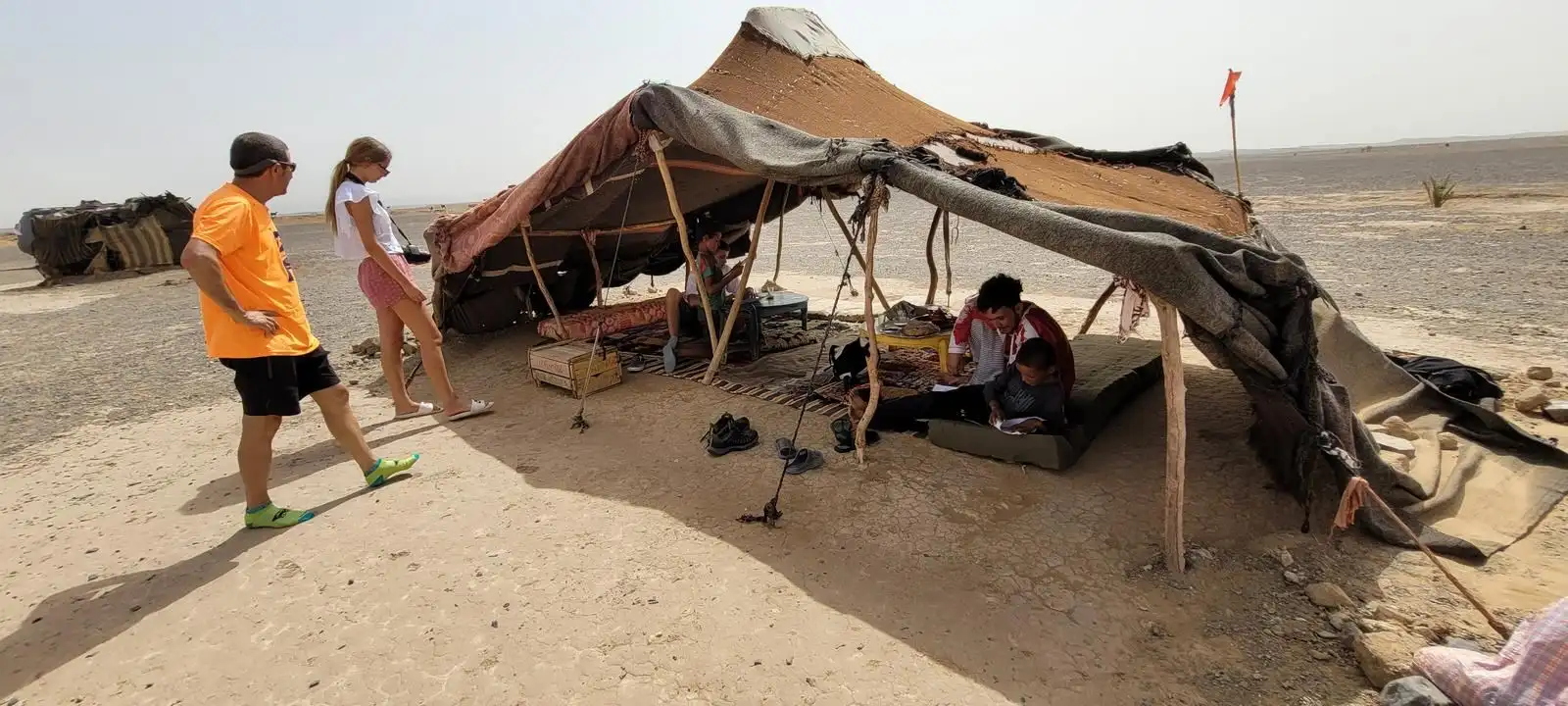
“Morocco is a dry country with fragile landscapes: terraced valleys in the High Atlas, oases fed by old irrigation channels, and the dunes of Erg Chebbi.”
— Our team in MoroccoHow it works
- Tell us your dates
Send us your dates, where you are staying and how many you are – on WhatsApp or by email.
- We plan it with you
We suggest the best time and option for responsible eco travel and send you a clear price.
- Meet our team
On the day, our team meets you and explains everything before you start.
- Enjoy every moment
Live the experience – and add more adventures to your trip if you like.
Ways to do it with us
Book it on its own, or as part of one of our itineraries.
Atlas village day walk from Marrakech
Walk between Amazigh villages and terraced fields, with lunch cooked by a local family.
Ask us on WhatsApp →4 Day Atlas Mountains Trek
Trek from village to village with a mountain guide and mules carrying the bags, sleeping in local gîtes.
See the itinerary →5 Days Sahara Desert Trekking
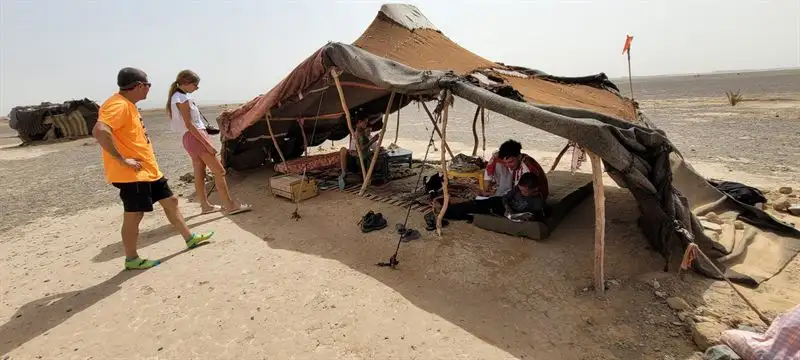
Walk with camels and nomad guides through the dunes and stony plains of Erg Chebbi, camping lightly.
See the itinerary →Argan cooperative and coast day
Visit a women’s argan cooperative near Essaouira and walk the quiet coast nearby.
Ask us on WhatsApp →A typical day
Times are approximate for an Atlas village day walk from Marrakech; multi-day treks and desert walks follow a different rhythm, and winter days are shorter.
- Pick-up from Marrakech
Drive towards the High Atlas valleys with your local guide.
- Village walk
Walk on mule paths between Amazigh villages and terraced fields.
- Water and farming
Your guide shows how shared irrigation channels feed the terraces and gardens.
- Lunch with a local family
A home-cooked meal and mint tea that brings income straight to the village.
- Short walk back
An easy path down the valley, with time for questions and photos (with permission).
- Return to Marrakech
Drop-off at your riad or hotel.
Where it happens
Responsible eco travel with us takes place in these parts of Morocco – tell us where you are staying and we suggest the closest option.
- 1Merzouga (Erg Chebbi)
- 2Essaouira
- 3Marrakech
Useful information for eco tourism in Morocco
Our responsible travel habits
Small groups, local staff, locally owned accommodation, refillable water, no single-use plastic where we can avoid it, and waste carried out from camps and trails. We also brief you on local customs before you arrive in a village.
Water in a dry country
Morocco faces serious water shortages. Take short showers, reuse towels, and do not ask for pools in the desert. In camps and gîtes, water is often brought in by truck or mule.
Animals
Please do not pay for photos with chained monkeys or snakes in the squares; it keeps wild animals in poor conditions. Our camels and mules are working animals, and loads and rest times are respected.
Photos and villages
Ask before photographing people, especially women and children, and do not hand out sweets or money to children. If you want to help, ask us how to support a local school or association properly.
Plastic
Plastic shopping bags have been banned in Morocco for years, but bottles are everywhere. A filter bottle or purification tablets cut your waste a lot on a trek.
Before you book
- Fitness
- Most days involve 3-5 hours of walking on uneven paths – tell us your level and we adapt the route.
- Accommodation
- Village gîtes are simple and clean, sometimes with shared bathrooms; tell us if you need more comfort and we balance the route.
- Diet
- Meals are cooked by local families with what the village grows – let us know about allergies or diets in advance.
- Water and plastic
- Bring a refillable or filter bottle; water is precious in villages and camps.
- Respect
- Modest clothes and asking before photos are expected in villages; we brief you on local customs before you arrive.
Best time for eco tourism in Morocco
Spring is the greenest time in the Atlas valleys, with almond and apple blossom, and autumn brings harvest and mild walking weather. Summer suits high mountain treks but is too hot for the desert. In winter, snow can close high passes.
- JanPossible
- FebGood
- MarBest
- AprBest
- MayBest
- JunGood
- JulPossible
- AugPossible
- SepBest
- OctBest
- NovBest
- DecPossible
BestGoodPossibleAvoid
Request your responsible eco travel
Fill in the form and press send: your request comes straight to our team’s inbox (or WhatsApp, if you prefer) and we reply with the details and a clear price.
- No payment to send a request
- We adapt the option to you
- Or write to us: +212 600 643 098
Eco tourism in Morocco: 10 questions
Eco tourism Morocco: what does it really mean?
It is travel that protects nature and benefits local people: small groups, local guides, family guesthouses, low-impact activities like walking and cycling, and careful use of water. In Morocco it often means time in Atlas villages, oases and the desert.
Is sustainable tourism in Morocco growing?
Yes. More village gîtes, cooperatives and small eco lodges are opening, and many travellers now look for local operators rather than big chains. Water saving and waste are still real challenges, which is why careful travel matters.
How can I travel responsibly in Morocco?
Book with local guides, stay in locally owned places, dress modestly, ask before taking photos, save water and avoid single-use plastic. Buy crafts directly from makers or cooperatives, and do not give money or sweets to children.
Are there eco lodges in Morocco?
Yes, mostly in the High Atlas, around Marrakech and in the south. Many are built with local earth and stone, use solar power and serve food from their own gardens. We choose places by how they work, not just by the word “eco”.
What are the best eco tours in Morocco?
Village-to-village treks in the High Atlas, desert walks with camels in Erg Chebbi, cycling through valleys and visits to women’s cooperatives are our favourites. They are active, low-impact and very personal.
Are eco tourism Morocco trips suitable for families?
Yes. Families enjoy short village walks, mule rides, bread baking and a night in a desert camp. We keep walking days short for children and choose guesthouses with private rooms.
Is it OK to visit Berber villages as a tourist?
Yes, when it is done with respect and a local guide who knows the families. Visits should be welcome, paid fairly and not turned into a show. Our village days include a meal or a stay that brings real income.
Is tap water safe to drink in Morocco?
Tap water in big cities is treated, but most visitors drink bottled or filtered water to avoid stomach trouble. A filter bottle is the greenest choice and works well on treks.
Are argan oil cooperatives worth visiting?
Yes, if they are real cooperatives run by local women. You see the slow work of cracking and grinding the nuts and buy directly from the makers. We take you to cooperatives, not to roadside shops using the name.
Do desert camps in Merzouga follow eco rules?
Practices vary a lot. We choose camps that limit water use, manage their waste and respect the dunes, and we prefer small camps over large noisy ones.
Combine it with
Two experiences in one trip – our favourite pairings.
+Responsible eco travel + Hiking & trekking adventuresExtend a village day into a multi-day trek from gîte to gîte in the High Atlas.See hiking & trekking adventures →+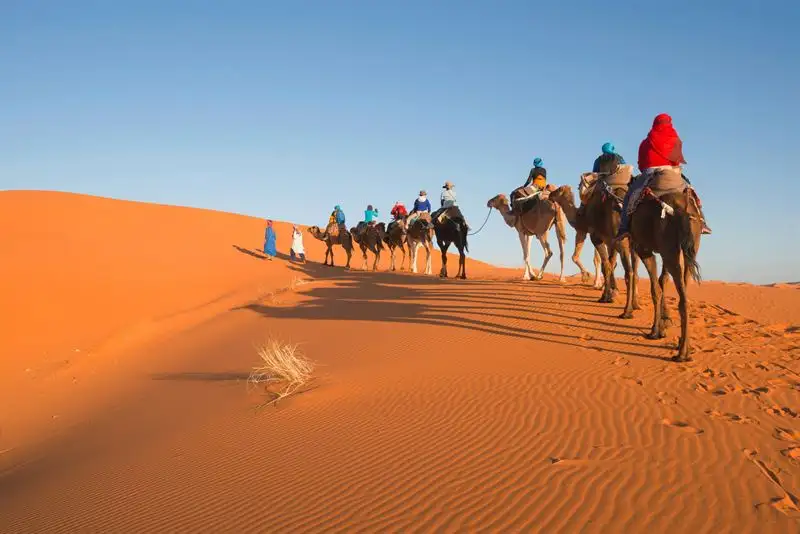 Responsible eco travel + Camel & horseback treksWalk with camels and nomad guides in the Erg Chebbi dunes near Merzouga, camping lightly.See camel & horseback treks →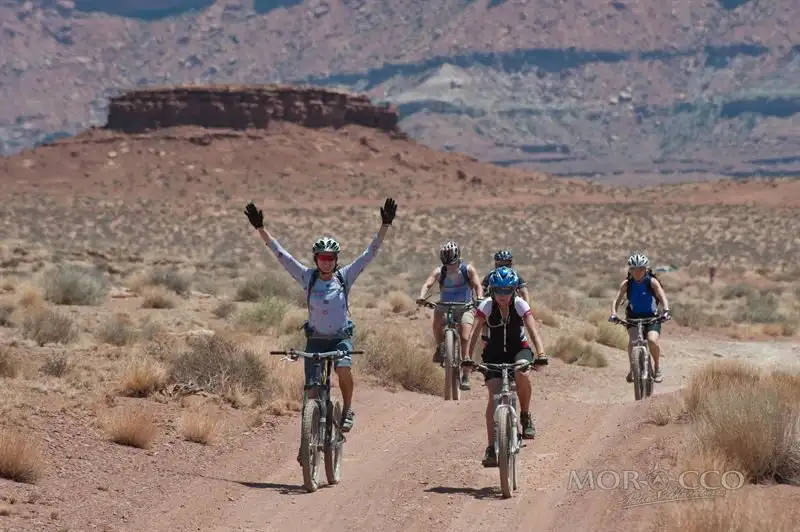
Add responsible eco travel to your trip
Tell us your dates and where you are staying – we organise everything with you.